Case Study 01
Favour Pieri
"A stylist gets a logo. A house gets an architecture."
Brand Strategy · Information Architecture · Audience Research
Qualitative Competitive analysis, positioning, information architecture
The work
Full brand repositioning and architecture — from "Faye Hair" to Favour Pieri.
My role
Research, strategy, information architecture, visual identity.
Objective
Find what made her different in a saturated market, then build a brand system around it.
The artifact
A complete brand architecture document — key pages recreated below.
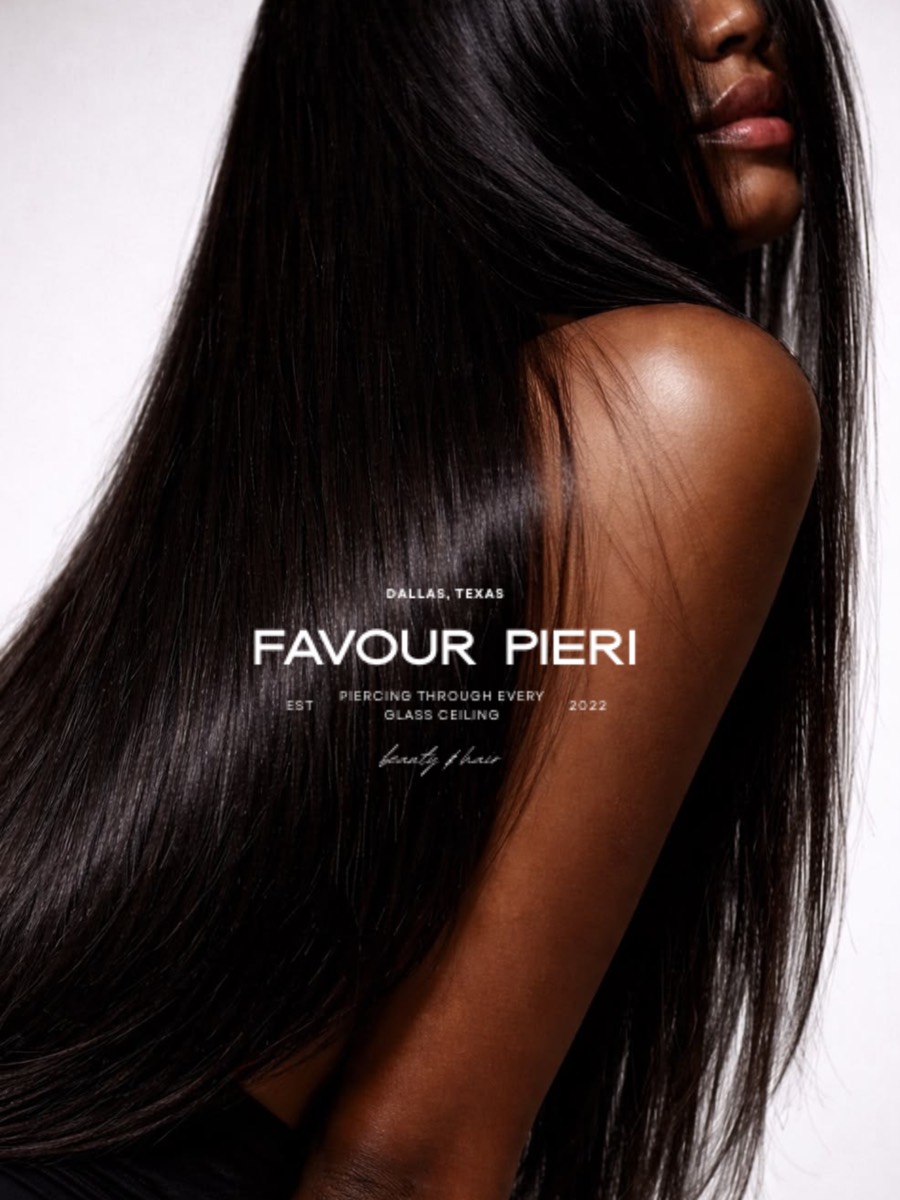
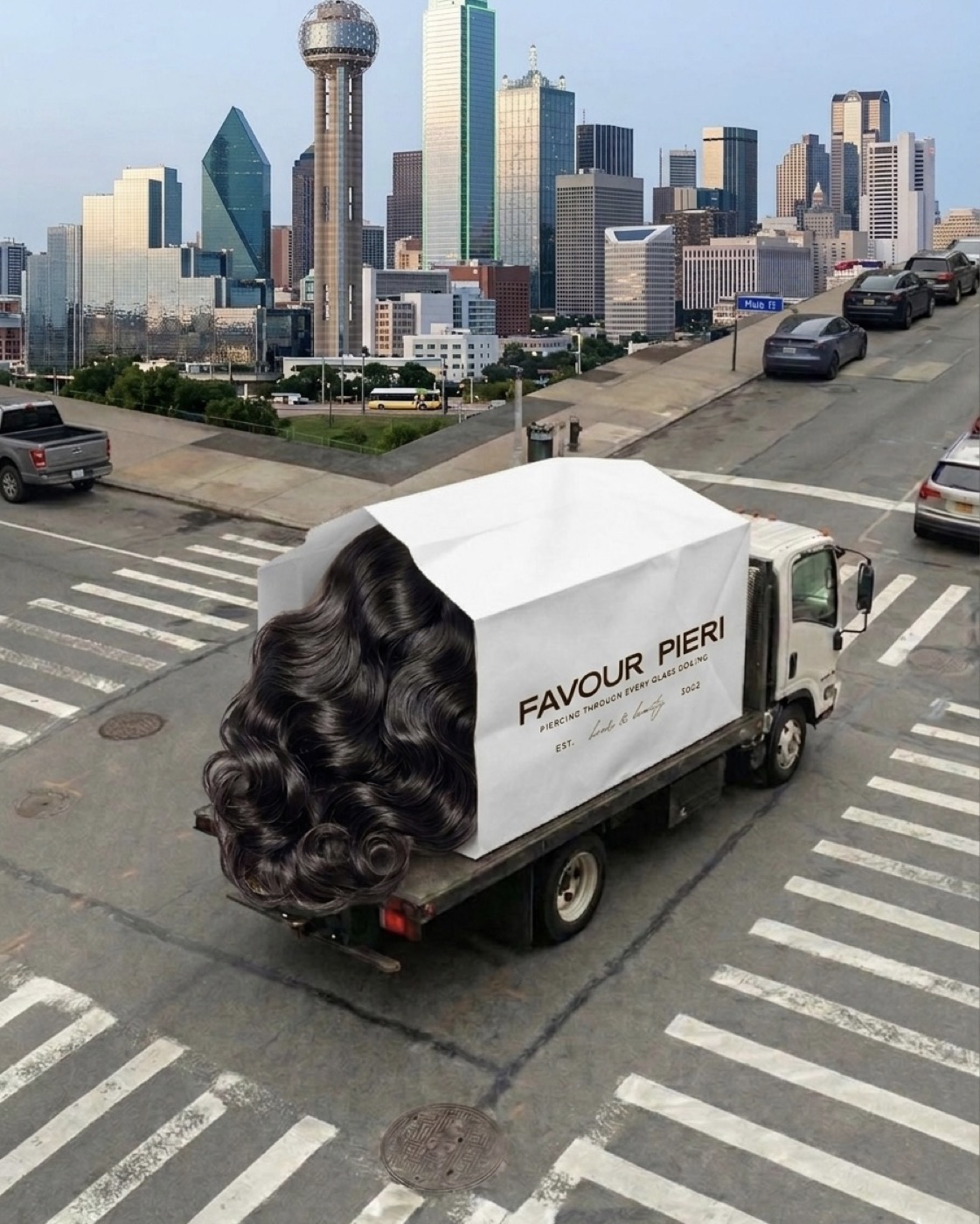
Observation
I scanned the US hair market — independent stylists, online hair vendors, and self-styled "luxury" hair brands. Three patterns showed up immediately:
- Independent stylists had inconsistent branding and no visual system. They looked interchangeable.
- Online vendors competed on price and bundles. Loud, transactional, forgettable.
- "Luxury" brands were luxury in aesthetic only — gold logos with nothing underneath.
The pattern across all of them: everyone was selling hair. No one was selling a belief. The entire category looked and sounded the same.
Hypothesis
Faye's real foundation wasn't hair. It was faith, excellence, and a vision to build something that outlasted her — to open doors for the women coming up behind her.
That was the unclaimed territory. Not "luxury hair." A beauty brand with a belief system — one that rejected the lie that faith and ambition can't share a table.
My hypothesis: if I positioned her around that belief instead of the service, her dream client — a layered woman who sees beauty as part of her purpose — would self-select in.
Decision
I built her a complete brand architecture: one name, three worlds. Favour Pieri became the parent brand. Beneath it, three divisions, each serving a different audience while carrying the same DNA.
The visual decisions, each tied to the positioning:
- Black, white, and chrome — not the category's default black-and-gold. Chrome reads modern and sharp. It pierces through; gold settles. High contrast that reads as wealth without trying.
- Editorial serif system — established, authored, intentional. A brand with something to say, not just sell.
- Monogram mark — monograms signal heritage and permanence. The visual language of houses, not vendors.
- Fashion-house layout — positions her beside luxury brands, not other stylists.
The Artifact
Key pages from the brand architecture document, recreated here in the site palette — adapting dense strategy content for a new medium.
The territory no one owned
1 · Brand Philosophy
"She was never meant to stay beneath it."
The manifesto line that anchors the whole system.
2 · Brand Architecture (Information Architecture) — One name. Three worlds.
Hair
In-home luxury hair services, Dallas.
Beauty
Premium lash work and advanced education.
The Pieri Foundation
Scholarships and mentorship for beauty professionals.
A parent entity with three children — each its own audience and entry point, all inheriting shared DNA.
3 · Brand Positioning — The four pillars
Luxury
Editorial restraint. Wealth that doesn't try.
Convenience
The service comes to her client's door.
Faith
Belief as the foundation, not a footnote.
Legacy
Built to outlast her — doors held open behind her.
4 · Voice — She is / She is not
She is
- Authored
- Intentional
- Quietly certain
- Elevated
- Purpose-driven
She is not
- Loud
- Transactional
- Apologetic
- Decorative for its own sake
- Chasing
5 · Visual Identity — Black, white & chrome
Chrome over gold: it pierces through where gold settles. (Recreated in this site's palette as a clean web section — original brand colors shown for fidelity.)
Outcome
The tell is the architecture itself. A stylist gets a logo. A house gets an architecture — a structured system for how the brand grows into products, education, and community. Building that document was the moment the repositioning became real.
"This is luxuryyyy. My mouth is physically open."
That reaction is the outcome I care about. Not because it's flattering — because it means the brand finally matched the woman behind it.
What this proves
- Competitive analysis — found the unclaimed market territory.
- Audience segmentation — built three personas, found the through-line.
- Information architecture — structured a parent/child brand taxonomy.
- Synthesis — distilled messy market observation into one defensible position.
- Content adaptation — redesigned a strategy doc for a new medium.
Reflection
What I learned / what I'd do differently
What I learned: positioning is subtraction. The strongest move wasn't adding more — it was refusing every quadrant the competition already crowded.
What I'd do differently: I'd validate the positioning with a few of her actual dream clients before finalizing — show them the territory and confirm the belief-led framing pulls them in. I designed it from market observation; I'd want to test it against real voices next.